
Grind Texas Blog
How to Kill a Tree Stump and Its Roots: What Actually Works
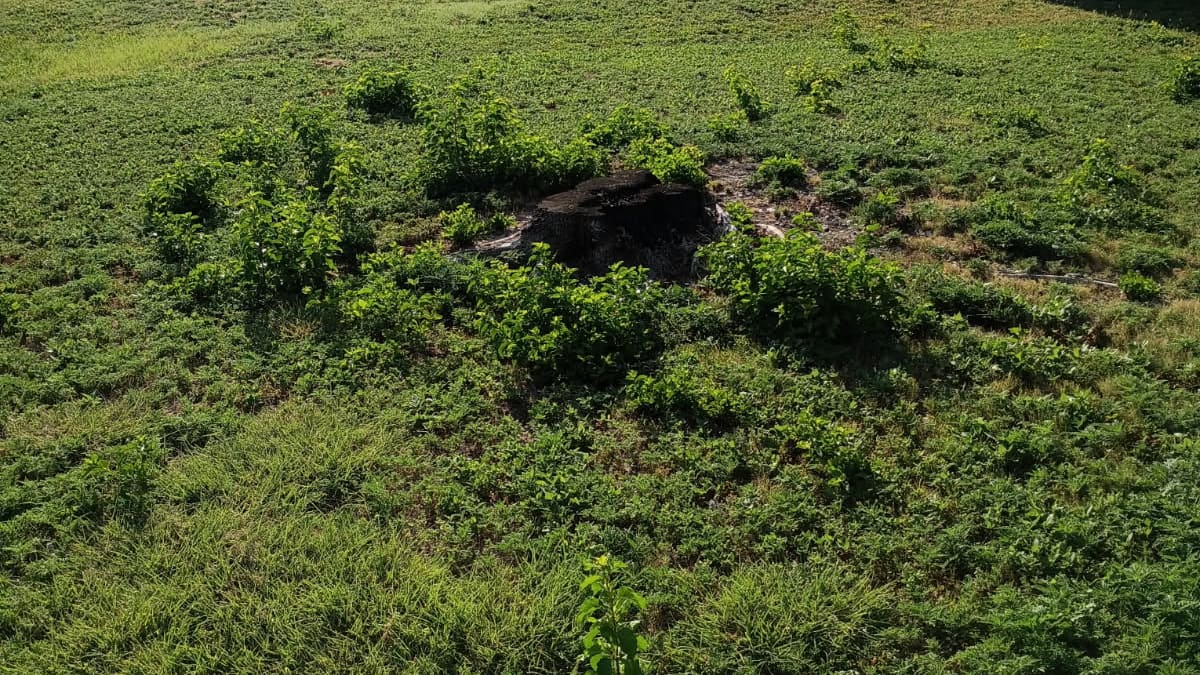
Cut a tree down and, for a lot of species, you haven't killed anything — you've pruned it aggressively. The root system is still alive, still full of stored energy, and for many DFW trees it responds the only way it knows how: sucker shoots, sometimes dozens of them, off the stump and roots. So “how do I get rid of this stump?” is really two questions — how do I stop the regrowth, and how do I make the stump itself go away. Here's the honest rundown of every common way to get rid of stumps, including the ones we don't sell.
Cut-and-paint herbicide: works, with patience
The most reliable chemical method is painting a systemic herbicide (glyphosate or triclopyr, sold as stump killer) onto a freshly cut surface — within minutes of the cut, on the outer ring of living wood, not the dead center. The stump pulls the chemical down into the roots. Done right, it genuinely kills the root system over several weeks. The catches: it only works well on a fresh cut, it doesn't remove anything (the dead stump still sits in your yard for years), and around vegetable gardens or in yards with pets, many folks would rather not.
Epsom salt: mostly wishful thinking
The internet's favorite. Drill holes, pack in Epsom salt, wet it, cover, repeat for months. It can eventually dry out a small stump, but “eventually” is doing heavy lifting — we've written up the honest version in our Epsom salt deep-dive. Short version: a season or more, unreliable, and the stump is still there at the end.
Tarping and burying: slow suffocation
Blocking all light with a heavy tarp or soil mound does starve the stump's regrowth, and combined with time it works — over a year or more, with a tarp-covered lump in your yard the whole while. It's free, and it's the slowest option on this list.
Burning: mostly a no in DFW
Open burning is generally prohibited inside city limits across the Metroplex, and a stump fire is a smoldering, root-following fire that can burn underground for days — near fences, gas lines, and neighbors. Outside city limits on rural acreage it's sometimes done with a burn barrel and a permit where allowed; inside the metro, skip it. Check your own city's ordinance before striking anything.
Drilling and nitrogen: speeds rot, doesn't kill
Drilling holes and packing high-nitrogen fertilizer feeds the fungi that decompose wood. It's a legitimate way to speed up natural rot — on a stump that's already dead. On a live, resprouting stump it does little, and either way you're on the multi-year rot timeline.
Killing the roots, not just the stump
Good news first: for most trees, you don't kill the roots separately — kill the crown (the junction where trunk meets roots) and the root system dies with it, then decomposes in the soil where it feeds your lawn instead of fighting it. That's true whether the crown dies by herbicide or comes out under a grinder. The exceptions are the aggressive root-suckering species — hackberry, mulberry, cottonwood, mesquite — which can push shoots straight from surviving roots even after the stump is dealt with. For those, treat new root suckers as they appear (cut and paint, or spot-spray the young foliage), and they run out of steam within a season. Roots that have surfaced across the lawn are their own problem — our above-ground roots guide covers which ones are safe to remove and how.
Digging it out: the hardest Saturday of your life
A mattock, a digging bar, a chain, and a lot of resolve will remove a small stump. A mature shade-tree stump in blackland clay is another matter — tap roots and laterals run deep, and it's brutal, slow work that leaves a crater. This is why stump grinders exist.
Grinding: the fastest way to get rid of a stump
Grinding takes the stump and the living root crown out several inches below grade in one visit — usually under an hour for a typical stump. No chemicals, no fire, no waiting a year. The crown is where resprouting comes from, so grinding below grade ends the regrowth for good, and the stump is simply gone — chips backfill the hole and the spot is ready for grass. That resprouting Princeton stump above? Here's what it looked like when we finished.
The honest decision guide
- No rush, small stump, comfortable with chemicals: cut-and-paint herbicide, then let it rot or grind it later.
- No rush, no chemicals: tarp it and wait a year-plus.
- Handy, several stumps, whole free weekend: consider a grinder rental — here's the real math.
- Want it gone this week: that's us. Text a photo to (940) 293-2715 for a fast, free quote.