
Grind Texas Blog
How Long Does a Tree Stump Take to Rot Naturally?
“Can't I just let it rot?” Absolutely — nature will take every stump eventually. The only question is whether you're comfortable with “eventually” meaning most of a decade in your front yard. Here's the honest timeline for North Texas.
The realistic numbers
A small, soft-wooded stump (hackberry, mulberry, Bradford pear) in contact with moist soil can break down in three to five years. A mature oak, pecan, or bois d'arc stump — the dense hardwoods DFW actually grows — commonly takes seven to ten years or more to decompose to the point you can mow over it, and the buried root flare takes longer still. Diameter matters more than anything: rot works from the outside in.
Why DFW is slow-rot country
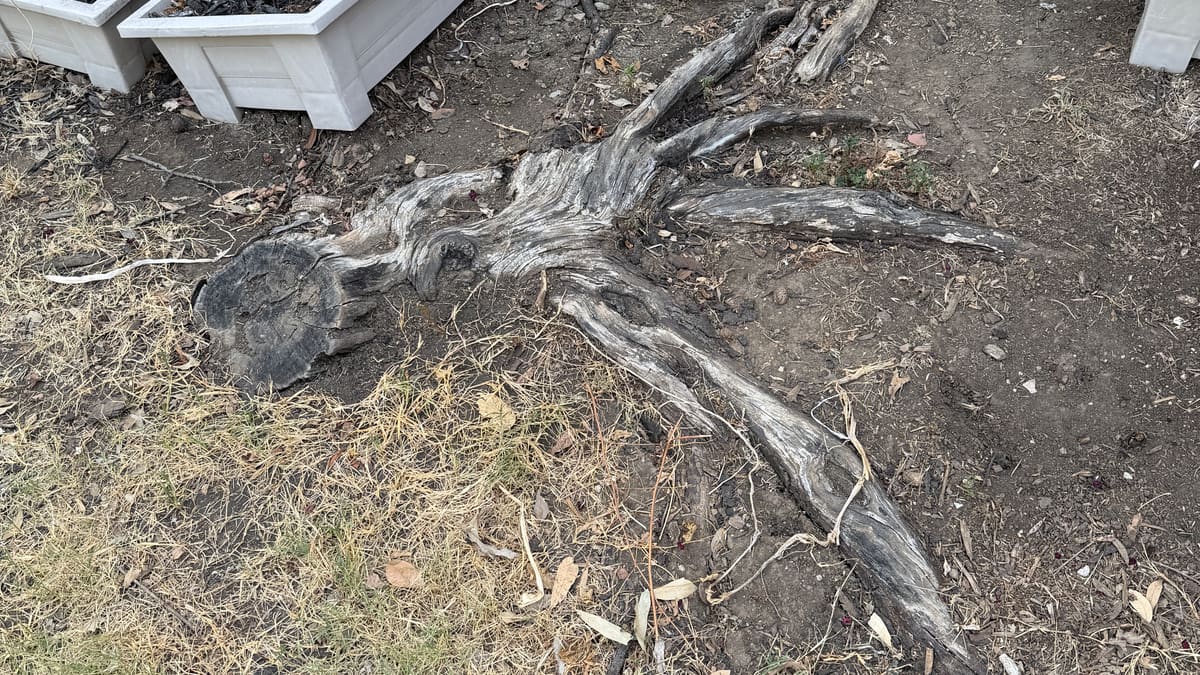
Decomposition is fungus work, and fungi want steady moisture. Our long, baking summers regularly dry stumps to the bone and put the process on pause for months at a time. Blackland clay doesn't help either — poor drainage swings stumps between waterlogged and bone dry. The stump in the photo above had clearly been in the ground for years and our grinder still found solid wood all through it.
Speeding it up (somewhat)
Drill deep holes, pack them with a high-nitrogen fertilizer, keep the stump damp, cover it to hold moisture — you're feeding the fungi, and you might cut the timeline meaningfully. It's the best of the passive methods, and it still thinks in years, not months. Full comparison of every approach in our stump-killing guide.
What moves in while you wait
A rotting stump is habitat. In Texas that means termites and carpenter ants — often years before the stump is gone — plus fungi blooms after rain, and for the resprouting species, live shoots the whole time. That's the real trade of the wait-it-out plan: a decade of hosting.
Grinding compresses those years into about an hour — stump and crown out below grade, chips backfilling the hole, ready for grass. If the math tips that way for you, text a photo to (940) 293-2715 for a fast, free quote.